
3L Portable Oxygen Cylinder: Uses, Duration and Safety Guide
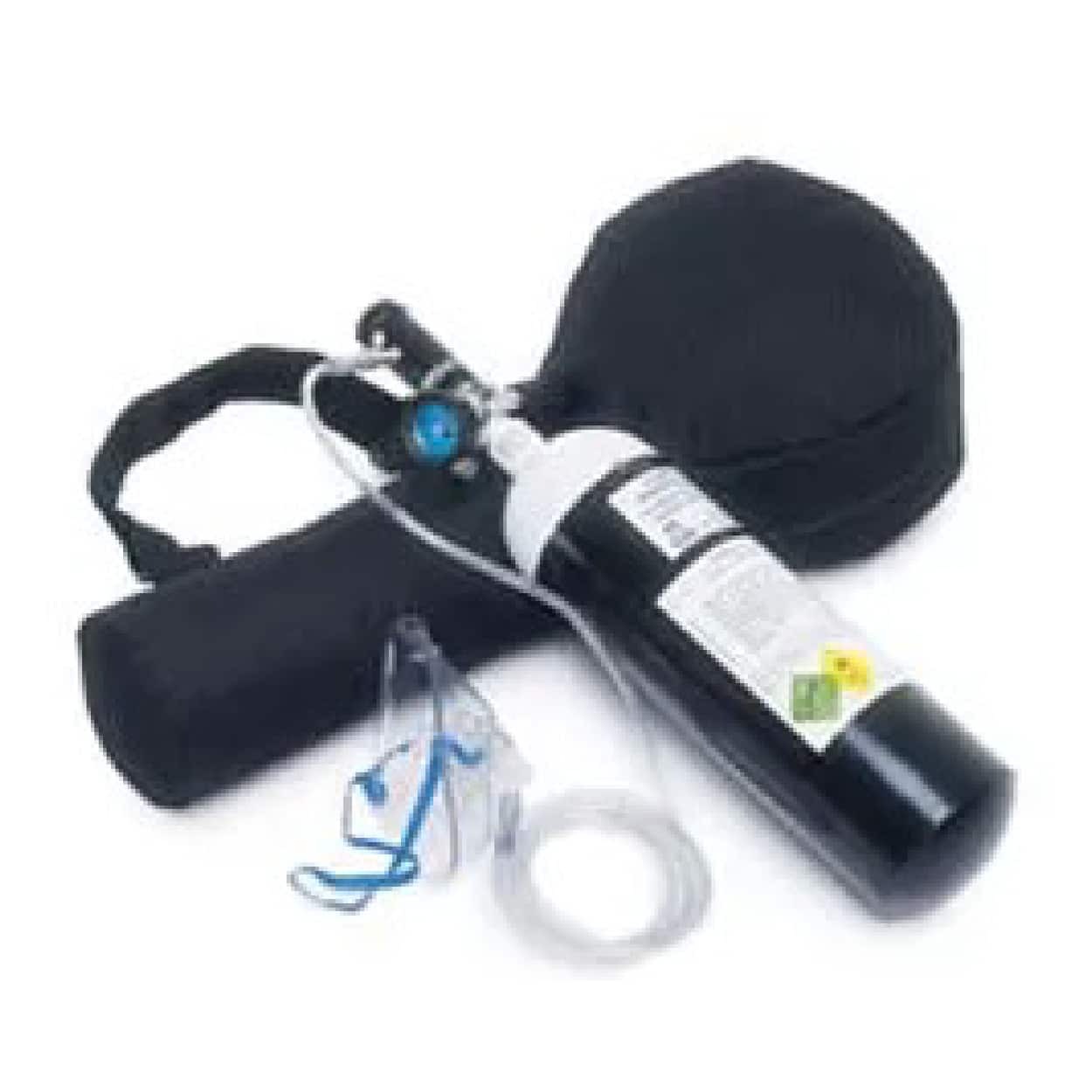
A 3L portable oxygen cylinder provides a compact way to store and transport compressed oxygen for appropriate medical and emergency applications. Compared with larger cylinders, its relatively small size can make it easier to transport between healthcare environments or use where mobility is important.
But what does the 3L specification actually mean? How long can a portable oxygen cylinder last? And what should healthcare facilities consider when choosing one?
Understanding these points is important because cylinder size alone does not tell you how much usable oxygen is available or how long it will last at a particular flow rate.
This guide explains the fundamentals of portable oxygen cylinders, including capacity, flow rate, duration, applications, handling and purchasing considerations.
What Is a Portable Oxygen Cylinder?
A portable oxygen cylinder is a pressure vessel designed to store compressed oxygen.
Medical oxygen cylinders form part of oxygen-delivery systems used in appropriate healthcare environments. Depending on the setup, a cylinder may be connected to components such as:
- Cylinder valve
- Pressure regulator
- Pressure gauge
- Flowmeter
- Oxygen tubing
- Appropriate patient interface
The exact components required depend on the cylinder, regulator and intended application.
Portable cylinders are smaller than many stationary cylinders, making them useful when oxygen needs to be moved between locations.
What Does 3L Mean on an Oxygen Cylinder?
This is an important distinction.
When a cylinder is described as a 3L oxygen cylinder, the 3-litre figure generally refers to the cylinder's internal or water capacity, rather than meaning that it contains only three litres of usable oxygen gas.
Oxygen inside the cylinder is stored under pressure. When the gas leaves the cylinder and expands toward atmospheric pressure, the available gas volume can be considerably greater than the cylinder's internal physical volume.
Therefore:
3L cylinder capacity ≠ 3 litres of usable oxygen.
The amount of oxygen available depends substantially on the cylinder's filling pressure and remaining pressure.
How Does a 3L Portable Oxygen Cylinder Work?
Medical oxygen is compressed and stored inside an appropriate high-pressure cylinder.
During use, a compatible regulator reduces the high cylinder pressure to a controlled operating pressure. A flowmeter or regulator system then allows oxygen to be delivered at an appropriate prescribed flow rate.
The general process is:
Cylinder → Valve → Pressure Regulator → Flow Control → Tubing → Appropriate Oxygen-Delivery Interface
Each component should be compatible with the particular cylinder and intended medical application.
How Long Does a 3L Oxygen Cylinder Last?
There is no universal runtime for every 3L cylinder.
Duration depends on factors such as:
- Cylinder working pressure
- Starting pressure
- Remaining oxygen
- Selected flow rate
- Regulator configuration
- Residual pressure requirements
For the Portable Oxygen Cylinder Complete 3L supplied by Premium Medical Equipment Innovations, the supplied product specification states:
Up to 7 hours of oxygen at a flow rate of 1 litre per minute.
This figure should be treated as the specified operating duration for that particular product configuration rather than a rule applying to every 3L cylinder.
Why Oxygen Flow Rate Matters
Flow rate describes how quickly oxygen is delivered and is commonly expressed in litres per minute (L/min).
If a cylinder contains a finite amount of usable oxygen, increasing the flow rate will generally reduce how long the available supply lasts.
For example, a cylinder operated at a higher flow rate will normally be depleted sooner than the same cylinder operating at a lower flow rate.
However, users should never change a medically prescribed oxygen flow rate simply to make a cylinder last longer.
The appropriate flow rate should be determined according to the patient's clinical requirements and professional instructions.
Understanding Oxygen Cylinder Duration
For procurement and equipment-planning purposes, a simplified concept is:
Available oxygen ÷ flow rate = approximate duration
However, actual cylinder-duration calculations require information about the particular cylinder, including its pressure and usable contents.
Healthcare personnel should use the manufacturer's specifications, appropriate cylinder calculations, and facility procedures when determining whether sufficient oxygen is available for a particular period.
This is particularly important before patient transport.
Why Choose a Portable Oxygen Cylinder?
The primary advantage of a portable cylinder is mobility.
Large oxygen cylinders may provide greater total capacity but can be more difficult to transport. Smaller cylinders sacrifice some total capacity in exchange for portability.
A portable cylinder can therefore be useful where oxygen needs to move with the patient or clinical team.
Common Applications of Portable Medical Oxygen Cylinders
Depending on the equipment specification and applicable clinical procedures, portable oxygen cylinders may be found in:
Hospitals
Portable cylinders can provide mobile oxygen supply where an appropriate cylinder-based system is required.
Clinics
Medical clinics may use appropriately configured cylinders as part of their oxygen-supply arrangements.
Ambulances and Emergency Medical Services
Portability is particularly important in emergency environments where equipment needs to move with healthcare personnel and patients.
Patient Transport
Portable oxygen equipment may be required when a patient who needs supplemental oxygen is transported between appropriate clinical areas or facilities.
Emergency Preparedness
Healthcare facilities may include appropriate oxygen cylinders within emergency-response planning.
The specific cylinder capacity required should be determined according to anticipated use and clinical requirements.
3L Portable Oxygen Cylinder vs Larger Cylinder
Choosing a cylinder size involves balancing portability against available oxygen capacity.
| Compact | Larger physical dimensions |
| Easier to transport | More difficult to transport |
| Lower total gas capacity | Higher total gas capacity |
| Useful for mobile applications | Useful for longer-duration requirements |
| Requires more attention to remaining supply | Longer supply may be available |
| Suitable where portability is important | Suitable where capacity is the priority |
Neither option is automatically better.
The correct choice depends on the intended clinical application.
Portable Oxygen Cylinder vs Oxygen Concentrator
An oxygen cylinder and an oxygen concentrator provide oxygen in fundamentally different ways.
Oxygen Cylinder
A cylinder stores a finite supply of compressed oxygen.
Once the available oxygen is depleted, the cylinder must be appropriately refilled or replaced.
Oxygen Concentrator
An oxygen concentrator uses electrical power to process surrounding air and provide oxygen-enriched gas.
The device does not store a large supply of compressed oxygen in the same way as a cylinder.
Which Is Better?
That depends on the application.
A portable cylinder can be valuable where electricity is unavailable or mobility is required. A concentrator can be advantageous where prolonged oxygen supply and reliable electrical power are available.
Some healthcare environments may use both technologies for different purposes.
What Is Included in a Complete Oxygen Cylinder Kit?
The term complete oxygen cylinder should always be checked against the supplier's actual package contents.
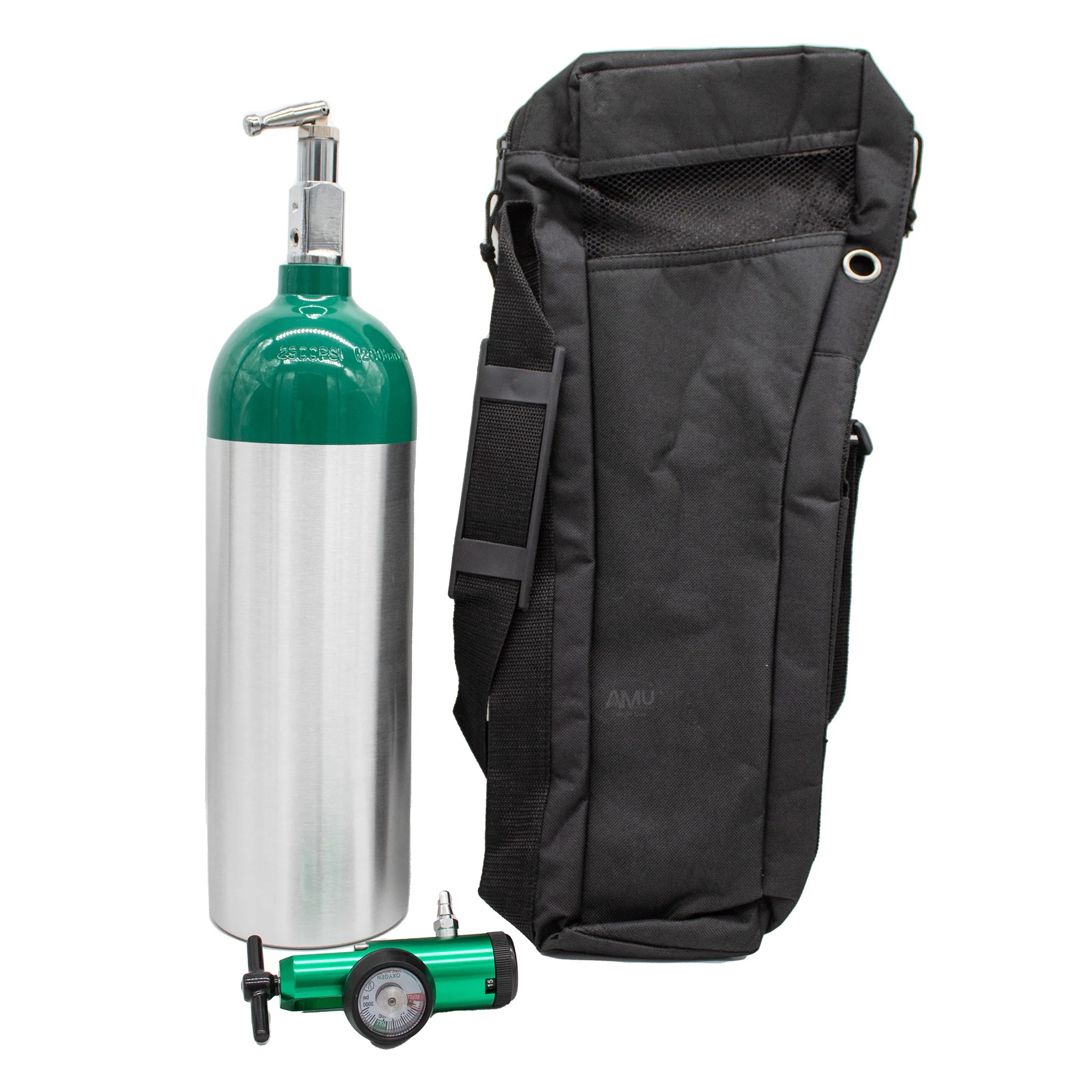
Depending on the product, a complete system may require items such as:
- Oxygen cylinder
- Cylinder valve
- Pressure regulator
- Pressure gauge
- Flowmeter
- Oxygen tubing
- Carrying arrangement
- Appropriate accessories
Do not assume that every product advertised as a "complete kit" contains the same accessories.
For procurement, request a written list of the components included with the exact model
How to Choose a Portable Oxygen Cylinder
1. Cylinder Capacity
Determine whether the available oxygen capacity is appropriate for the expected application.
A 3L cylinder may provide useful portability, while a larger cylinder may be more appropriate when greater capacity is required.
2. Working Pressure
Check the manufacturer's specified working pressure.
Pressure is essential for understanding the cylinder's oxygen capacity and operational requirements.
3. Cylinder Material
Medical gas cylinders may be manufactured from different materials.
Check the exact cylinder specification for:
- Construction material
- Weight
- Durability
- Applicable standards
Lighter construction can be advantageous when portability is a priority.
4. Regulator Compatibility
The regulator must be compatible with the cylinder valve and intended application.
Never assume that regulators are interchangeable simply because they appear similar.
5. Flow Range
Check the regulator or flowmeter's supported flow range and ensure it is appropriate for the intended clinical requirements.
6. Cylinder Weight
The total filled weight is particularly important for a portable system.
A cylinder described as portable may still be inconvenient for some transport applications if the complete assembly is heavy.
7. Included Accessories
Confirm exactly what is supplied with the cylinder.
This prevents situations where the cylinder arrives, but additional essential components must be purchased separately before it can be appropriately commissioned.
8. Certification and Documentation
Healthcare procurement teams should verify the relevant cylinder markings, documentation, inspection requirements, and conformity with applicable medical-gas and pressure-vessel regulations in their jurisdiction.
Oxygen Cylinder Safety
Oxygen itself is not a fuel, but it supports combustion. Materials can ignite more easily and burn more intensely in oxygen-enriched environments.
Safe handling is therefore essential.
Important precautions include:
- Keep oxygen equipment away from flames and ignition sources.
- Do not smoke around oxygen equipment.
- Keep oils and grease away from oxygen valves and fittings.
- Secure cylinders against falling or rolling.
- Use appropriate cylinder trolleys or carrying equipment.
- Protect cylinders from physical damage.
- Use only compatible regulators and fittings.
- Do not modify cylinder valves or safety components.
- Store cylinders according to applicable requirements.
- Follow manufacturer and facility safety procedures.
Medical facilities should also ensure that personnel handling compressed oxygen cylinders receive appropriate training.
Why Oil and Grease Must Be Kept Away from Oxygen Equipment
Oil, grease and some other combustible substances can react dangerously in oxygen-rich, high-pressure environments.
For this reason, oxygen valves, regulators and fittings should be kept clean and free from oil and grease.
Never lubricate oxygen-cylinder components unless a specific manufacturer-approved procedure and material explicitly permits it.
How Should Portable Oxygen Cylinders Be Stored?
Appropriate storage helps protect both the cylinder and the surrounding environment.
Healthcare facilities should follow applicable regulations and manufacturer requirements. General principles include keeping cylinders:
- Secure from falling
- Away from excessive heat
- Away from flames and ignition sources
- In appropriately ventilated areas
- Protected from physical damage
- Separated or organised according to facility procedures
- Clearly identifiable
Full and empty cylinders should also be managed according to the healthcare facility's medical-gas procedures.
Can You Travel With a Portable Oxygen Cylinder?
The word portable does not mean that a compressed oxygen cylinder can automatically be carried on every form of transport.
Transport requirements can differ for:
- Private vehicles
- Ambulances
- Public transport
- Commercial aircraft
- International travel
Airlines in particular have specific rules governing supplemental oxygen and compressed gas cylinders.
Anyone planning travel should confirm requirements with the relevant transport provider before travelling rather than assuming a personal oxygen cylinder will be accepted.
Medical Oxygen Is Different from Ordinary Compressed Gas
A cylinder intended for medical oxygen applications must be treated as medical gas equipment.
Healthcare buyers should verify the intended gas, cylinder specification, valve system, regulatory requirements and filling arrangements.
Do not use an unidentified or inappropriate compressed-gas cylinder as a substitute for properly specified medical oxygen equipment.
When Should Oxygen Be Used?
Supplemental oxygen is a medical intervention.
A portable cylinder provides the oxygen supply, but it does not determine whether an individual requires oxygen or what flow rate should be used.
For patient treatment, oxygen should be administered according to appropriate professional clinical direction and established healthcare procedures.
This distinction is particularly important for online medical-equipment information: purchasing a cylinder is not a substitute for determining the patient's oxygen requirements.
3L Portable Oxygen Cylinder Complete Kit
Premium Medical Equipment Innovations supplies the Portable Oxygen Cylinder Complete 3L, designed to provide a compact oxygen supply solution for appropriate healthcare and emergency applications.
The supplied product information specifies:
Cylinder capacity: 3L
Configuration: Portable complete kit
Specified duration: Up to 7 hours
Reference flow: 1 litre per minute
Configuration: Portable complete kit
Specified duration: Up to 7 hours
Reference flow: 1 litre per minute
Internal Product Link
On your WordPress article, link the anchor:
3L Portable Oxygen Cylinder Complete Kit
directly to the product page once it is published.
This creates a natural transition from the educational article to the commercial product without turning the entire blog into an advertisement.
Frequently Asked Questions
What does 3L mean on an oxygen cylinder?
The 3L designation generally refers to the cylinder's internal water capacity. It should not be interpreted as meaning the cylinder provides only three litres of usable oxygen gas.
How long does a 3L oxygen cylinder last?
Runtime depends on cylinder pressure, remaining contents and oxygen flow rate. Your particular 3L product is specified as providing up to 7 hours at 1 L/min.
Does a higher oxygen flow rate empty the cylinder faster?
Yes. With a finite oxygen supply, increasing the flow rate generally reduces the available operating duration. A prescribed flow rate should not be altered merely to conserve oxygen.
Is a 3L oxygen cylinder suitable for patient transport?
A portable cylinder may be suitable for appropriately managed patient transport when its capacity, expected duration, equipment configuration and clinical requirements are appropriate.
What is the difference between a 3L and 5L oxygen cylinder?
The primary distinction is cylinder capacity. However, usable oxygen also depends on working pressure and other specifications. A larger physical capacity will generally allow more gas to be stored under comparable conditions but will usually increase size and weight.
Is a portable oxygen cylinder the same as an oxygen concentrator?
No. A cylinder stores compressed oxygen, whereas an oxygen concentrator uses electrical power to extract and concentrate oxygen from ambient air.
Can I take a portable oxygen cylinder on an aeroplane?
Do not assume so. Airlines and aviation authorities impose specific restrictions on compressed oxygen cylinders. Travellers requiring supplemental oxygen should contact the airline in advance and follow its approved medical-oxygen procedures.
Is medical oxygen flammable?
Oxygen is not itself flammable, but it strongly supports combustion. Fires can start more easily and burn more intensely in oxygen-enriched environments.
Can I use oil on an oxygen cylinder regulator?
No ordinary oil or grease should be applied to oxygen valves, regulators or fittings. Oxygen equipment should be maintained according to the manufacturer's approved procedures.
Where can I buy a 3L portable oxygen cylinder in South Africa?
Premium Medical Equipment Innovations supplies medical and healthcare equipment for hospitals, clinics and healthcare organisations. Buyers can enquire about the 3L Portable Oxygen Cylinder Complete Kit for current specifications, availability and procurement requirements.
Conclusion
A 3L portable oxygen cylinder combines compressed oxygen storage with a relatively compact form factor, making it useful where mobility and convenient transportation are important.
However, cylinder capacity is only one part of the specification. Buyers should also examine working pressure, regulator compatibility, flow range, cylinder weight, included accessories, documentation and expected oxygen duration.
It is equally important to understand that oxygen duration depends on the amount of usable gas and selected flow rate. For your specific Portable Oxygen Cylinder Complete 3L, the supplied specification indicates up to seven hours at 1 litre per minute.
For hospitals, clinics, emergency services and other healthcare organisations, selecting an oxygen cylinder should therefore be based on the intended application and verified technical specifications rather than size alone.