
Types of Blood Pressure Machine: Which Is Best?
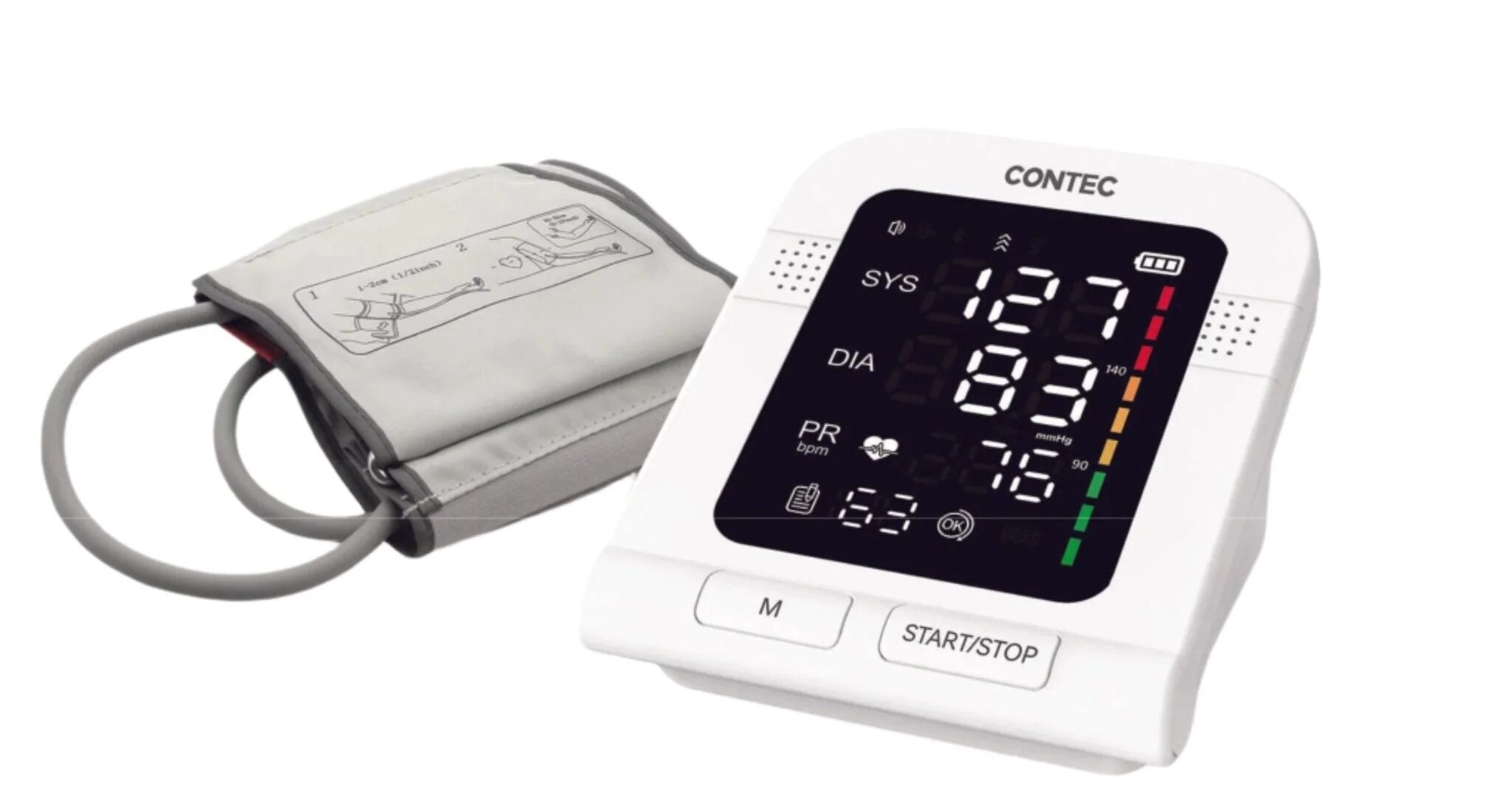
Blood pressure monitoring is an important part of cardiovascular assessment, but with so many devices available, choosing the right monitor can be confusing. Understanding the different types of blood pressure machine can help healthcare professionals, medical facilities and individual users select equipment suited to their requirements.
The main types of blood pressure monitors include digital upper-arm monitors, wrist monitors, manual aneroid sphygmomanometers, traditional mercury sphygmomanometers and professional clinical blood pressure monitors.
Each type works differently and has its own advantages, limitations and appropriate applications.
In this guide, we explain the different blood pressure machine types, how they work, their key differences and what to consider before selecting a monitor.
What Is a Blood Pressure Machine?
A blood pressure machine, also known as a blood pressure monitor or sphygmomanometer, is a device used to measure arterial blood pressure.
A standard blood pressure result contains two measurements:
Systolic blood pressure – the upper value, representing pressure in the arteries when the heart contracts.
Diastolic blood pressure – the lower value, representing arterial pressure between heartbeats.
Blood pressure is normally expressed in millimetres of mercury (mmHg).
For example, a result may be displayed as:
120/80 mmHg
Different blood pressure machines use different technologies to obtain these measurements.
What Are the Different Types of Blood Pressure Machines?
Blood pressure machines can broadly be divided into automatic digital monitors and manual sphygmomanometers, with additional variations according to cuff location, intended user, and clinical application.
The major types include:
- Digital upper-arm blood pressure monitors
- Digital wrist blood pressure monitors
- Manual aneroid blood pressure monitors
- Mercury sphygmomanometers
- Professional clinical blood pressure monitors
- Mobile and wall-mounted blood pressure monitors
- Ambulatory blood pressure monitors
- Veterinary blood pressure monitors
Let’s examine each type.
1. Digital Upper-Arm Blood Pressure Monitor
A digital upper-arm blood pressure monitor is one of the most common types of automatic BP machines.
The cuff is placed around the upper arm, and the device electronically controls or assists with inflation and determines the blood pressure measurement.
The results are then displayed digitally.
Depending on the model, the display may show:
- Systolic pressure
- Diastolic pressure
- Pulse rate
- Irregular heartbeat indicators
- Movement indicators
- Previous readings
- Average readings
Some advanced models also provide Bluetooth connectivity and multiple-user memory.
Advantages of Digital Upper-Arm Monitors
Digital upper-arm monitors can provide:
- Straightforward operation
- Automatic measurement
- Easy-to-read displays
- Stored measurements
- Reduced need for manual auscultation
- Convenient repeated monitoring
For users who are not trained in manual auscultatory measurement, an appropriate validated automatic upper-arm monitor is generally more practical than a manual aneroid device.
2. Wrist Blood Pressure Monitor
A wrist blood pressure monitor is a compact digital device with a cuff designed to fit around the wrist.
Its portability makes it convenient for travel and situations where a compact monitor is desirable.
Typical features may include:
- Automatic measurement
- Digital display
- Pulse measurement
- Memory storage
- Irregular heartbeat detection
- Rechargeable or battery operation
- Bluetooth connectivity on selected models
However, positioning is particularly important with wrist monitors.
The wrist needs to be positioned correctly relative to the heart according to the manufacturer’s instructions. Incorrect positioning can affect the reading.
Premium Medical Equipment Innovations offers models such as the Rossmax S150 Wrist BP Meter, which includes additional monitoring features.
3. Aneroid Blood Pressure Monitor
An aneroid blood pressure monitor is a manual sphygmomanometer that uses a mechanical dial rather than an electronic display.
A typical aneroid system contains:
- Pressure gauge
- Inflatable cuff
- Bladder
- Inflation bulb
- Air-release valve
- Tubing
When performing conventional auscultatory measurement, the operator also uses a stethoscope.
The cuff is inflated and then gradually deflated while the healthcare professional listens for Korotkoff sounds and watches the mechanical pressure gauge.
The appropriate sound points are used to identify systolic and diastolic pressure.
Advantages of Aneroid BP Monitors
Potential advantages include:
- No batteries required
- Portable designs available
- Traditional manual measurement
- Suitable for appropriately trained users
- Multiple configurations available
- Useful for clinical training
However, manual measurement requires appropriate technique and training.
Mechanical aneroid gauges should also be appropriately maintained and checked for calibration according to manufacturer recommendations.
4. Mercury Sphygmomanometer
The mercury sphygmomanometer is the traditional blood pressure measuring instrument that uses a column of mercury to indicate cuff pressure.
Like an aneroid monitor, conventional mercury measurement is manual and requires appropriate auscultatory technique.
Historically, mercury sphygmomanometers played an important role in clinical blood pressure measurement.
However, mercury presents environmental and handling concerns, and healthcare systems in many regions have moved toward validated mercury-free alternatives.
Where mercury devices remain in use, facilities should follow applicable regulations, occupational safety requirements, and mercury-handling procedures.
5. Professional Digital Blood Pressure Monitor
Professional healthcare environments may use clinical digital blood pressure monitors designed for frequent measurement.
Depending on the model, professional monitors may provide:
- Automatic blood pressure measurement
- Large displays
- Multiple cuff options
- Memory
- Pulse measurement
- Mobile stands
- Rechargeable batteries
- Data-management capabilities
- Connectivity options
These devices may be suitable for environments such as:
- Hospitals
- Clinics
- Consultation rooms
- Outpatient departments
- Medical practices
When purchasing equipment for professional use, healthcare facilities should consider whether the particular model has been appropriately validated for the intended patient population and clinical application.
6. Mobile Blood Pressure Machines
A mobile blood pressure machine is mounted on a wheeled or adjustable stand.
This configuration is particularly useful in healthcare facilities where equipment needs to move between patients or examination areas.
Premium Medical Equipment Innovations, for example, supplies a Mercurial Mobile BP Meter with a telescopic stand, incorporating an adjustable-height stand and a five-wheel base.
Mobile configurations can be useful in:
- Hospital wards
- Clinics
- Examination rooms
- Treatment areas
7. Wall-Mounted Blood Pressure Monitor
A wall-mounted blood pressure monitor provides a permanent or semi-permanent measuring station.
These monitors are useful where blood pressure is regularly measured in the same examination area.
A typical wall-mounted aneroid model can include:
- Large dial
- Adult cuff
- Inflation bulb
- Coiled tubing
- Swivelling gauge
Premium Medical Equipment Innovations supplies wall-mounted aneroid BP meter configurations for clinical environments.
8. Ambulatory Blood Pressure Monitor
An ambulatory blood pressure monitor, commonly called an ABPM, is designed to obtain repeated blood pressure measurements over an extended period while the patient continues normal daily activities.
The patient wears a cuff connected to a portable monitoring device.
The system takes measurements at programmed intervals, providing healthcare professionals with a series of blood pressure readings over time.
Ambulatory monitoring differs substantially from taking a single measurement in a clinic or at home.
It can provide information about blood pressure patterns across different periods of the day and night.
9. Veterinary Blood Pressure Monitor
Blood pressure monitoring is not limited to humans.
A veterinary blood pressure monitor is designed or configured for blood pressure measurement in animals.
Veterinary models may provide:
- Automatic measurement
- Different cuff sizes
- Colour LCD displays
- Stored readings
- Trend information
- Animal-specific configurations
Premium Medical Equipment Innovations supplies the Contec08A-Vet Blood Pressure Meter, which is designed for veterinary applications, including pets and other appropriate animal patients.
Digital vs. Manual Blood Pressure Machine
One of the most important decisions when selecting a monitor is whether to use a digital or manual blood pressure machine.
| Feature | Digital BP Monitor | Manual BP Monitor |
| Measurement | Automatic/electronic | Manual |
| Display | Digital | Mechanical dial/column |
| Stethoscope | Generally not required | Required for auscultatory measurement |
| Training | Easier for many users | Requires appropriate training |
| Power | Usually batteries/electricity | Aneroid models need no electrical power |
| Portability | Model dependent | Often highly portable |
| Memory | Often available | Generally unavailable |
| Automatic averaging | Available on some models | No |
| Calibration/maintenance | Model dependent | Important for aneroid gauges |
The right choice depends on who will use the device and where it will be used.
Upper-Arm vs Wrist Blood Pressure Machine
Another common comparison is between upper-arm and wrist blood pressure monitors.
Upper-Arm Monitor
An upper-arm monitor places the cuff around the upper arm.
Validated automatic upper-arm devices are widely used for blood pressure monitoring.
Wrist Monitor
A wrist monitor places the cuff around the wrist.
Its compact size can make it convenient, but correct positioning is particularly important.
For either design, users should follow the manufacturer’s positioning and measurement instructions.
Aneroid vs Digital Blood Pressure Machine
An aneroid blood pressure machine and a digital BP machine differ considerably in how measurements are obtained.
Aneroid monitors require the user to:
- Position the cuff correctly.
- Inflate the cuff.
- Control cuff deflation.
- Listen using a stethoscope.
- Observe the pressure gauge.
- Identify systolic and diastolic readings.
An automatic digital monitor performs much of the measurement process electronically.
For trained medical professionals, manual measurement remains a useful clinical skill.
For many home users, a suitable validated automatic monitor is considerably easier to operate correctly.
Which Type of Blood Pressure Machine Is Most Accurate?
There is no single answer based purely on whether a machine is digital, aneroid or another type.
Accuracy depends on factors including:
- Device validation
- Calibration and maintenance
- Correct cuff size
- Correct cuff placement
- Patient positioning
- Arm positioning
- Measurement technique
- Movement during measurement
- Device condition
- Intended patient population
A high-quality monitor used incorrectly can still produce unreliable measurements.
Therefore, buyers should look beyond the general type of blood pressure machine and consider the validation and specifications of the individual model.
How to Choose the Right Blood Pressure Machine
The appropriate monitor depends on its intended application.
1. Decide Who Will Use It
A healthcare professional trained in manual auscultation may have different requirements from someone performing routine monitoring at home.
2. Consider Upper Arm or Wrist
Determine which measurement location is appropriate.
Upper-arm devices are widely used, while wrist monitors can provide greater portability for suitable users.
3. Choose the Correct Cuff Size
Cuff size is important for obtaining reliable blood pressure measurements.
Check the manufacturer’s supported arm or wrist circumference.
4. Look for Device Validation
For clinical decision-making and routine monitoring, consider whether the exact device model has been independently validated according to recognised protocols.
Do not assume that every monitor sold commercially has undergone the same validation.
5. Consider Memory Requirements
Digital monitors may provide:
- Single-user memory
- Multiple-user memory
- Date and time
- Average readings
- Smartphone connectivity
These features can be useful for tracking measurements.
6. Consider Portability
If equipment must travel between locations, a pocket aneroid monitor or compact digital device may be appropriate.
For fixed clinical areas, a wall-mounted or mobile-stand system may be preferable.
7. Consider Power Requirements
Manual aneroid monitors require no batteries.
Digital devices may use:
- Disposable batteries
- Rechargeable batteries
- AC adapters
- USB charging
Consider how the monitor will be used before selecting the power configuration.
Blood Pressure Machines for Hospitals and Clinics
Healthcare facilities may require several types of blood pressure machines rather than one universal model.
A clinic may use:
- Professional digital monitors
- Aneroid sphygmomanometers
- Mobile BP monitors
- Wall-mounted monitors
- Ambulatory BP monitors
- Multiple cuff sizes
Equipment selection should consider the intended patient populations, clinical workflow, infection-control requirements and device validation.
Blood Pressure Machines for Medical Students
Medical and nursing students learning manual blood pressure measurement may require an aneroid sphygmomanometer and stethoscope.
This allows students to learn:
- Correct cuff placement
- Manual cuff inflation
- Controlled deflation
- Korotkoff sound recognition
- Systolic pressure identification
- Diastolic pressure identification
- Manual gauge reading
Students should follow their training institution’s equipment requirements.
Blood Pressure Machines for Home Use
For home monitoring, ease of correct operation is particularly important.
A suitable automatic monitor can remove the need to manually coordinate:
- Cuff inflation
- Pressure release
- Stethoscope positioning
- Korotkoff sound identification
- Gauge interpretation
Users should choose an appropriately validated device, use the correct cuff size and follow the manufacturer’s measurement instructions.
Blood Pressure Machine Features to Consider
When comparing blood pressure monitors, look beyond price.
Useful specifications can include:
- Measurement method
- Device validation
- Cuff size
- Measurement range
- Display size
- Memory capacity
- Irregular heartbeat detection
- Movement detection
- Averaging functions
- Multiple-user profiles
- Bluetooth connectivity
- Battery life
- AC power compatibility
- Portability
- Warranty
- Replacement cuff availability
The features that matter most depend on how and where the monitor will be used.
Blood Pressure Monitors Available from Premium Medical Equipment Innovations
Premium Medical Equipment Innovations supplies several blood pressure monitoring configurations for professional, clinical and other appropriate applications.
Available product types include:
Aneroid Pocket BP Meters
Compact manual sphygmomanometers for appropriately trained users.
Internal link: BP Meter Aneroid Pocket Deluxe
Aneroid Palm BP Meters
Palm-style manual blood pressure monitors, including models supplied with multiple cuff sizes.
Internal link: BP Meter Aneroid Palm 5 Cuff Set
Wall-Mounted Aneroid BP Meters
Large-dial configurations designed for fixed clinical measurement areas.
Internal link: BP Meter Aneroid Wall Mount Square Swivel
Wrist Blood Pressure Monitors
Compact digital wrist monitors offering automatic measurement and additional digital features.
Internal link: BP Meter Rossmax S150 Wrist
Digital Upper-Arm Monitors
Automatic upper-arm devices for convenient blood pressure monitoring.
Internal link: BP Meter Rossmax CH155F
Professional Digital BP Meters
Professional monitoring systems intended for appropriate healthcare environments.
Internal link: DM-3000 Professional Digital BP Meter
Mobile BP Meters
Mobile stand-mounted blood pressure equipment for hospitals and clinical facilities.
Internal link: BP Meter Mercurial Mobile Telescopic Stand
Veterinary BP Monitors
Specialised monitors designed for veterinary blood pressure measurement.
Internal link: Contec08A Veterinary Blood Pressure Meter
Frequently Asked Questions
What are the main types of blood pressure machines?
The main types include digital upper-arm monitors, wrist monitors, aneroid sphygmomanometers, mercury sphygmomanometers, professional clinical monitors and ambulatory blood pressure monitors. There are also wall-mounted, mobile, and veterinary configurations.
What are the two main types of blood pressure monitors?
At a broad level, blood pressure monitors can be divided into automatic digital monitors and manual sphygmomanometers.
What is an aneroid blood pressure machine?
An aneroid BP machine is a manual sphygmomanometer that uses a mechanical dial to display cuff pressure. Traditional auscultatory measurement requires an appropriate stethoscope and trained operator.
What type of blood pressure machine is used at home?
Automatic upper-arm digital monitors are commonly used for home monitoring because they automate much of the measurement process. Users should select an appropriately validated model with the correct cuff size.
What type of blood pressure machine do doctors use?
Healthcare professionals may use several types, including professional digital monitors and manual aneroid sphygmomanometers. Equipment varies according to the clinical environment and application.
What is the difference between a digital and manual BP machine?
A digital BP monitor electronically determines and displays the measurement. A traditional manual monitor requires a trained user to control cuff pressure and determine systolic and diastolic readings using an auscultatory technique.
Is a wrist or upper-arm blood pressure machine better?
The appropriate choice depends on the user and device. Upper-arm monitors are widely used, while wrist devices can offer greater portability but require particularly careful positioning.
What is an ambulatory blood pressure machine?
An ambulatory blood pressure monitor is a portable system programmed to take repeated measurements over an extended period while the patient carries out normal daily activities.
Which blood pressure machine is best?
The appropriate machine depends on the intended user, measurement environment, patient population, device validation, cuff sizing and required features. Device type alone is not enough to determine measurement quality.
Where can I buy blood pressure machines in South Africa?
Premium Medical Equipment Innovations supplies various blood pressure monitoring devices for healthcare professionals, hospitals, clinics and other appropriate users in South Africa and African markets.
Choosing the Right Type of Blood Pressure Machine
Understanding the different types of blood pressure machine makes it easier to choose equipment suited to a particular monitoring requirement.
For convenient automatic measurement, a suitable digital upper-arm blood pressure monitor may be appropriate.
For portability, selected users may consider a wrist monitor.
Healthcare professionals and students trained in auscultatory measurement may require an aneroid sphygmomanometer.
Hospitals and clinics may additionally need professional digital monitors, mobile systems, wall-mounted equipment or ambulatory blood pressure monitors.
Rather than choosing on price alone, consider device validation, cuff size, measurement method, intended user, portability, maintenance and required features.
Premium Medical Equipment Innovations supplies a range of blood pressure monitoring and diagnostic equipment for healthcare professionals and facilities across South Africa and Africa.
Contact us for product availability, specifications and institutional procurement enquiries.