
Why Do Stethoscopes Have Two Sides? Bell vs Diaphragm
If you have ever examined a traditional stethoscope closely, you may have wondered: why do stethoscopes have two sides?
The two sides of a traditional dual-head stethoscope are called the bell and diaphragm. They provide different acoustic characteristics that help healthcare professionals listen to different frequencies of body sounds.
The larger, flatter diaphragm is primarily used for higher-frequency sounds, while the smaller bell is traditionally used for lower-frequency sounds.
This two-sided chestpiece should not be confused with a double tube stethoscope. The two sides describe the chestpiece, whereas double tubing describes the acoustic pathways carrying sound toward the user’s ears.
Understanding this distinction makes it easier to understand how a stethoscope works and why healthcare professionals may select different parts of the instrument during auscultation.

What Are the Two Sides of a Stethoscope Called?
The two sides of a traditional dual-head stethoscope are called the bell and diaphragm.
Although both collect body sounds, they have different acoustic characteristics.
1. The Diaphragm
The diaphragm is normally the larger, flatter side of the stethoscope chestpiece.
It contains a thin membrane that responds to sound vibrations from the body.
The diaphragm is primarily used for listening to higher-frequency sounds and is commonly used during routine examination of the heart and lungs.
2. The Bell
The bell is traditionally the smaller, cup-shaped side of the chestpiece.
It is designed primarily for lower-frequency sounds and is generally applied lightly against the patient’s skin when used in its conventional form.
Together, the bell and diaphragm provide a broader range of acoustic listening options.
Stethoscope Bell vs Diaphragm: What Is the Difference?
The fundamental difference between the stethoscope bell and diaphragm is the range of sound frequencies each is designed to transmit effectively.
| Feature | Diaphragm | Bell |
| Shape | Larger and flat | Smaller and cup-shaped |
| Main Frequency Range | Higher-frequency sounds | Lower-frequency sounds |
| Skin Contact | Usually firmer contact | Traditionally light contact |
| Heart Examination | Commonly used | Used for selected low-frequency sounds |
| Lung Examination | Commonly used | Less commonly used for routine breath sounds |
| Position | One side of dual-head chestpiece | Opposite side of chestpiece |
The distinction is therefore primarily about sound frequency, rather than one side being exclusively for the heart and the other exclusively for the lungs.
What Is the Diaphragm of a Stethoscope Used For?
The diaphragm is the listening surface most people recognise when looking at a stethoscope.
It is generally used for relatively higher-frequency sounds.
Healthcare professionals commonly use the diaphragm when listening to:
- Normal heart sounds
- Many heart murmurs
- Breath sounds
- Bowel sounds
- Korotkoff sounds during manual blood pressure measurement
The exact acoustic response varies according to the construction and design of the particular stethoscope.
Because many routine respiratory sounds have relatively higher-frequency characteristics, the diaphragm is commonly used when auscultating the lungs.

What Is the Bell of a Stethoscope Used For?
The bell is traditionally used to detect lower-frequency sounds.
During an appropriate cardiovascular examination, it can help a trained healthcare professional listen for selected low-frequency heart sounds and murmurs.
Unlike the diaphragm, a traditional bell is generally placed lightly against the skin.
Applying excessive pressure can change how the underlying skin behaves acoustically and reduce the bell’s advantage for low-frequency sounds.
Correct technique is therefore important.
Which Side of a Stethoscope Is Used for Heart Sounds?
Both sides may have roles during cardiovascular examination.
The diaphragm is commonly used to listen to normal first and second heart sounds and many higher-frequency cardiac sounds.
The bell may be selected when the clinician wants to assess particular lower-frequency cardiac sounds.
Therefore, it is inaccurate to say that only one side of a dual-head stethoscope is used for the heart.
The side selected depends on the frequency and type of sound being assessed.

Which Side of a Stethoscope Is Used for Lung Sounds?
The diaphragm is generally used for routine lung auscultation.
Breath sounds and many clinically relevant respiratory sounds are better assessed using the diaphragm’s acoustic characteristics.
During a respiratory examination, the healthcare professional typically places the diaphragm directly against appropriate areas of the chest and back and compares sounds between different locations.
Auscultation findings should always be interpreted as part of the broader clinical examination.
Why Not Make a Stethoscope With Only One Side?
Some stethoscopes do have only one physical listening side.
However, the traditional bell-and-diaphragm arrangement provides two different acoustic characteristics in a single instrument.
This allows a healthcare professional to change listening characteristics by rotating the chestpiece rather than changing instruments.
Modern stethoscope technology has also produced alternative solutions.
For example, some models incorporate tunable diaphragms, allowing the listener to change the frequency response by adjusting the pressure applied to the chestpiece.
Therefore, two physical sides are useful, but they are not essential to every modern stethoscope design.
Do All Stethoscopes Have Two Sides?
No.
Although the traditional dual-head stethoscope has a bell and diaphragm, stethoscope designs vary.
Available configurations can include:
- Dual-head bell and diaphragm stethoscopes
- Single-head stethoscopes
- Tunable diaphragm stethoscopes
- Dual-sided tunable stethoscopes
- Electronic stethoscopes
- Specialist cardiology stethoscopes
The question “why do stethoscopes have two sides?” therefore applies primarily to traditional dual-head designs.
What Is a Dual-Head Stethoscope?
A dual-head stethoscope has a chestpiece offering two listening surfaces or configurations.
In a traditional design, these are the bell and diaphragm.
The chestpiece can normally be rotated so that the healthcare professional selects which acoustic side is connected to the tubing.
Dual-head designs are widely associated with traditional medical examination and are particularly useful for students learning the differences between bell and diaphragm auscultation.
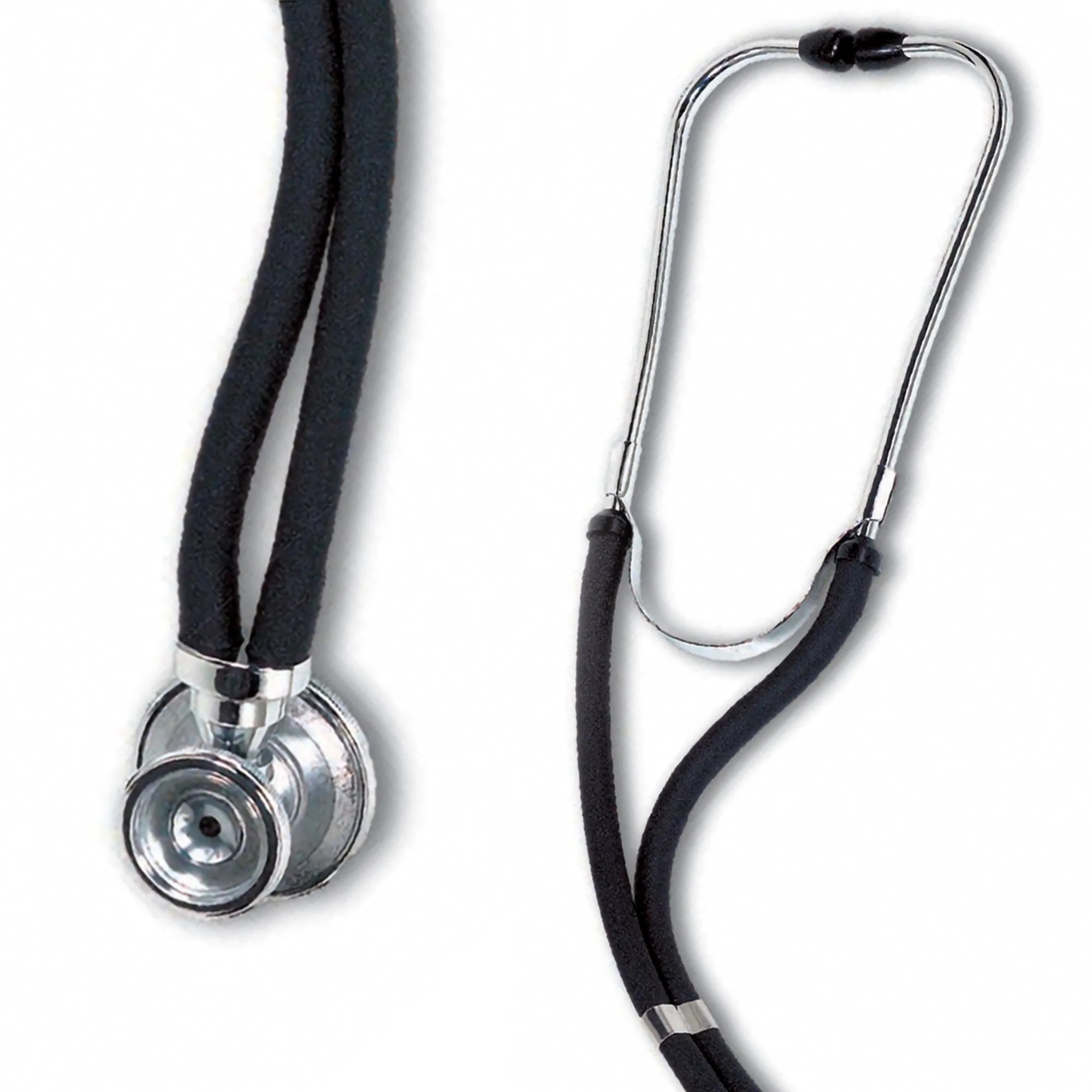
Two-Sided Stethoscope vs Double Tube Stethoscope
These terms are easily confused, but they describe different parts of a stethoscope.
| Term | Part of Stethoscope | Meaning |
| Two-sided | Chestpiece | Two listening surfaces |
| Dual-head | Chestpiece | Usually bell and diaphragm |
| Double tube | Tubing | Two acoustic pathways |
| Dual lumen | Tubing | Separate internal acoustic channels |
| Rappaport | Overall design | Often incorporates dual-head and dual-tube features |
A stethoscope can therefore have a two-sided chestpiece and double tubing at the same time.
This configuration is particularly associated with traditional Sprague-Rappaport designs.
Why Do Some Stethoscopes Have Two Tubes?
Two tubes serve a different purpose from two chestpiece sides.
A stethoscope with 2 tubes uses separate acoustic pathways for transmitting sound from the chestpiece toward the binaural earpieces.
Depending on the design, these pathways may appear as two separate external tubes or be incorporated into a dual-lumen tubing system.
The presence of two tubes does not automatically make a stethoscope acoustically superior.
Overall performance also depends on:
- Chestpiece construction
- Diaphragm quality
- Tubing design
- Acoustic seal
- Ear-tip fit
- Materials
- Manufacturing quality
The important distinction is simple:
Two sides = sound selection at the chestpiece
Two tubes = sound transmission through the tubing system
What Is a Double Tube Stethoscope?
A double tube stethoscope uses two acoustic pathways to transmit body sounds toward the listener’s ears.
One of the most recognisable examples is the Sprague-Rappaport stethoscope.
A traditional Rappaport-style stethoscope may include:
- Dual acoustic tubing
- Dual-head chestpiece
- Bell and diaphragm functions
- Binaural ear tubes
- Interchangeable diaphragms
- Replacement ear tips
- Additional chestpiece accessories
This makes the design particularly versatile for general clinical examination and medical training.
What Is a Rappaport Stethoscope?
A Rappaport stethoscope, often called a Sprague-Rappaport stethoscope, is a traditional acoustic stethoscope design commonly recognised by its dual tubing and versatile chestpiece configuration.
Depending on the model, interchangeable components may allow the stethoscope to be configured for different examination requirements.
Rappaport-style stethoscopes are commonly encountered in:
- Hospitals
- Medical clinics
- Nursing environments
- Medical schools
- General practices
- Emergency-care environments
- Healthcare training facilities
Because models vary, buyers should examine the specifications and accessories supplied with the particular stethoscope rather than assuming every Rappaport model has identical components.
Premium Medical Equipment Innovations supplies diagnostic instruments and medical equipment to healthcare professionals, hospitals, clinics, medical practices, and training institutions in South Africa and other African markets.
For healthcare professionals looking for a traditional Rappaport design, consider our Deluxe Rappaport Double Tube Stethoscope.
The product features a stainless steel dual-head chest piece, dual-lumen PVC tubing, interchangeable accessories, and assorted colour options.
Double Tube vs Single Tube Stethoscope
Another common question is whether a double tube stethoscope is better than a single tube stethoscope.
Neither construction is automatically superior.
| Feature | Double Tube | Single Tube |
| Acoustic Pathway | Dual/separated | Typically single external tube |
| Common Traditional Design | Sprague-Rappaport | Many conventional stethoscopes |
| Chestpiece | Often dual-head | Model dependent |
| Construction | More complex | Often simpler |
| Weight | May be heavier | Often lighter |
| Interchangeable Parts | Common on Rappaport models | Model dependent |
| Clinical Use | General auscultation | General or specialist auscultation |
Acoustic performance should be assessed according to the quality of the complete instrument rather than tube count alone.
What Can You Listen to With a Dual-Head Stethoscope?
Appropriately trained healthcare professionals can use a stethoscope during several types of physical examination.
Heart Sounds
Stethoscopes are used during cardiovascular examinations to assess heart sounds and other clinically relevant acoustic findings.
The diaphragm and bell may be used for different sound frequencies.
Lung Sounds
The diaphragm is commonly used during respiratory auscultation to assess breath sounds at different locations across the chest and back.
Blood Pressure
A stethoscope can be used together with a manual sphygmomanometer to listen for Korotkoff sounds during auscultatory blood pressure measurement.
Bowel Sounds
Stethoscopes may also be used during appropriate abdominal examinations to listen to bowel sounds.
The interpretation of all auscultation findings depends on professional clinical training.
Are Two-Sided Stethoscopes Good for Medical Students?
A traditional dual-head stethoscope can be particularly useful during medical and nursing education because students can learn how different chestpiece configurations affect auscultation.
Students can become familiar with:
- Bell use
- Diaphragm use
- Heart auscultation
- Lung auscultation
- Manual blood pressure measurement
- Correct chestpiece placement
- Correct ear-tip orientation
- Different sound frequencies
A Rappaport-style model can additionally introduce students to dual tubing and interchangeable chestpiece components.
Students should nevertheless follow the equipment requirements of their university, nursing school, or clinical training programme.
How to Choose a Dual-Head or Double Tube Stethoscope
If you are buying a stethoscope, consider the entire instrument rather than focusing only on whether it has two sides or two tubes.
Chestpiece Construction
The chestpiece should be appropriately constructed for its intended clinical application.
Materials and manufacturing quality can affect durability, weight and acoustic performance.
Bell and Diaphragm Design
Determine whether the model uses a traditional bell and diaphragm, tunable diaphragm or another chestpiece system.
Tubing
Check whether the stethoscope uses:
- Single tubing
- Two external tubes
- Dual-lumen tubing
The tubing should remain flexible and maintain an effective acoustic pathway.
Ear Tips
Correctly fitting ear tips improve comfort and help create an acoustic seal that reduces external sound interference.
Replacement Parts
Availability of replacement diaphragms, ear tips and other components can increase the useful service life of the instrument.
Intended Clinical Application
A medical student performing general physical examinations may have different requirements from a cardiologist or another specialist.
Choose the stethoscope according to its intended use rather than appearance alone.
How to Use a Two-Sided Stethoscope
The precise method depends on the model, but a conventional dual-head stethoscope normally requires the user to select the desired side of the chestpiece.
The chestpiece is rotated until the required bell or diaphragm is acoustically connected to the tubing.
For a traditional design:
Use the diaphragm when assessing higher-frequency sounds.
Use the bell lightly when assessing appropriate lower-frequency sounds.
Correct ear-tip positioning is also important. The binaural ear tubes should be positioned so that the ear tips align comfortably with the ear canals.
Healthcare professionals and students should follow appropriate clinical training and the manufacturer’s instructions for their specific model.
How to Care for a Stethoscope
Routine care helps maintain hygiene and the condition of the instrument.
Follow the manufacturer’s cleaning instructions and your healthcare facility’s infection-control procedures.
General considerations include:
- Clean the chestpiece appropriately between patients.
- Keep ear tips clean.
- Inspect diaphragms for damage.
- Check tubing for cracking or deterioration.
- Avoid unnecessary exposure to excessive heat.
- Do not immerse the complete instrument unless the manufacturer specifically permits it.
- Replace damaged components when necessary.
- Store the stethoscope appropriately when not in use.
Cleaning requirements can vary according to the materials used in a particular model.
Deluxe Rappaport Double Tube Stethoscope
Premium Medical Equipment Innovations supplies the Deluxe Rappaport Double Tube Stethoscope for healthcare professionals, students and medical facilities.
The model combines a stainless-steel dual-head chestpiece with dual-lumen PVC tubing and includes interchangeable accessories.
This makes it an appropriate option for buyers looking for a traditional Rappaport-style stethoscope incorporating both a versatile chestpiece and dual acoustic tubing.
Internal link: Add your existing link here using the anchor text:
Deluxe Rappaport Double Tube Stethoscope
Where to Buy a Double Tube Stethoscope in South Africa
Premium Medical Equipment Innovations supplies stethoscopes and other diagnostic medical equipment to healthcare professionals, hospitals, clinics, medical practices and training institutions in South Africa and other African markets.
When selecting a stethoscope, consider the chestpiece design, tubing construction, comfort, supplied accessories and intended clinical application.
For product availability, specifications, or institutional procurement, contact Premium Medical Equipment Innovations for current information.
Frequently Asked Questions About Double Tube Stethoscopes
Why do stethoscopes have two sides?
Traditional dual-head stethoscopes have two sides to provide different acoustic listening characteristics. The diaphragm is primarily used for higher-frequency sounds, while the bell is traditionally used for lower-frequency sounds.
What are the two sides of a stethoscope called?
The two sides of a traditional dual-head stethoscope are called the bell and diaphragm.
What is the diaphragm of a stethoscope used for?
The diaphragm is primarily used for higher-frequency sounds and is commonly selected for routine heart, lung and other appropriate auscultation.
What is the bell of a stethoscope used for?
The traditional bell is designed primarily for lower-frequency sounds and is generally placed lightly against the skin when used.
Which side of a stethoscope is used for heart sounds?
Both may be used. The diaphragm is commonly used for normal and higher-frequency heart sounds, while the bell may be used for selected lower-frequency cardiac sounds.
Which side of a stethoscope is used for lung sounds?
The diaphragm is generally used for routine lung auscultation.
Do all stethoscopes have two sides?
No. Some stethoscopes use single-head chestpieces, tunable diaphragms, electronic systems or other designs.
Is a dual-head stethoscope the same as a double tube stethoscope?
No. Dual-head describes the chestpiece configuration, while double tube describes the acoustic tubing or pathways. A stethoscope can have both features.
Why do some stethoscopes have two tubes?
A double tube stethoscope uses separate acoustic pathways for transmitting body sounds toward the listener’s ears. The precise construction varies between models.
Is a double tube stethoscope better than a single tube stethoscope?
Not necessarily. Overall performance depends on the chestpiece, tubing construction, diaphragm, ear-tip fit, materials, and overall manufacturing quality.
What is a Rappaport stethoscope?
A Rappaport or Sprague-Rappaport stethoscope is a traditional design commonly associated with dual acoustic tubing, a versatile chestpiece and interchangeable components.
Can a stethoscope be used to measure blood pressure?
Yes. During manual auscultatory blood pressure measurement, a stethoscope can be used with an appropriate sphygmomanometer to listen for Korotkoff sounds.
Conclusion
So, why do stethoscopes have two sides?
In a traditional dual-head stethoscope, the two sides provide different acoustic characteristics. The diaphragm is primarily used for higher-frequency sounds, while the bell is designed for lower-frequency sounds.
Having both listening surfaces in one chestpiece allows healthcare professionals to select the appropriate acoustic configuration during an examination.
It is equally important to distinguish a two-sided stethoscope from a double tube stethoscope. Two sides refer to the bell and diaphragm of the chestpiece, whereas double tubing refers to the acoustic pathways transmitting sound toward the user’s ears.
Some traditional Rappaport-style stethoscopes combine both features, providing a dual-head chestpiece together with dual acoustic tubing.
Understanding the bell, diaphragm, chestpiece, and tubing makes it easier for healthcare professionals and students to select a stethoscope that matches their clinical and training requirements.
For buyers looking for this type of design, the Deluxe Rappaport Double Tube Stethoscope provides a dual-head stainless steel chest piece, dual-lumen tubing, and interchangeable accessories suitable for professional clinical use.